
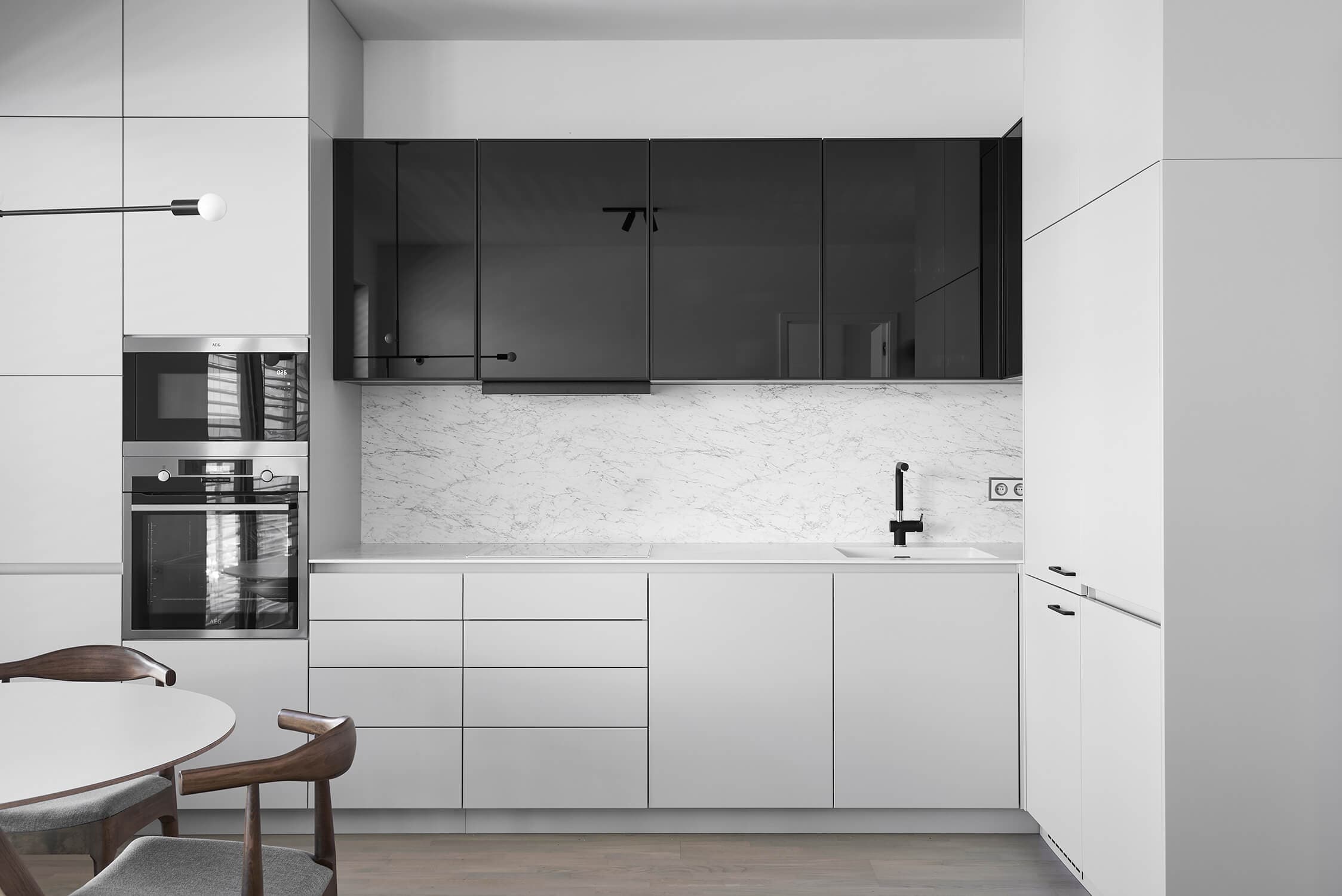
Fronts and finishes
Melamine panels
Melamine-faced particleboard is the most affordable option. It comes in thousands of designs, from solid colors to wood grains and stone looks. Many boards have synchronized textures (slightly more expensive), where the 3D texture follows the printed pattern the way it would on a natural material. We cut the boards into parts and cover the exposed particleboard core on the edges with ABS edge banding, usually in the same pattern as the face. Melamine may be the cheaper material, but its surface is harder and more scratch-resistant than any of the options below.
Matte and gloss finishes
Price depends on the sheen level. Super-matte finishes, which are popular right now, usually come with an anti-fingerprint coating. Super-matte costs roughly 3–4 times as much as melamine, but we still count it as an affordable material. The edges are again finished with ABS edge banding.
Thermofoil doors
The cheaper versions cost about the same as the pricier melamine boards. There are also super-matte and super-gloss foils, which cost more than the gloss finishes above. Today’s foils have come a long way and have nothing in common with the peeling foils of the early days. Each part is cut to size first. Then a vacuum press applies the foil to the face and all four edges. The back is a different material, available in about 10 colors versus hundreds of foils for the front. The doors can also be profiled. Look closely at the front edges and you won’t see a seam between the board and the edge, unlike the options above.
Solid wood panels
It’s solid wood all the way through, so we can route grooves or pulls right into it, and it doesn’t need edge banding. Because it’s a natural material, it can have small imperfections, and each board can vary a little in grain and color since it comes from a different tree. Fully natural boards are also more prone to warping, especially in humid rooms. We usually apply two coats of OSMO hardwax oil to both sides. That lets the wood breathe and makes it warmer to the touch and more natural-looking. The downside is that the oil should be reapplied once a year. You can lacquer it instead, but you lose that warm feel.
Veneer
Veneer panels have a particleboard core, which makes them more dimensionally stable. They’re also cheaper than solid wood. On the other hand, the parts need veneer edge banding after they’re cut. You can’t route or cut grooves into the visible surfaces, because under the thin layer of veneer is a particleboard core that isn’t meant to be seen.
Lacquered panels
This is one of the pricier materials. Some shops lacquer only the front and the edges. We lacquer every surface, back included, to keep the parts from warping. You can choose from thousands of RAL and NCS colors in any sheen level. An experienced finisher can also achieve a super-matte or high-gloss surface. We can route grooves or profiled pulls into lacquered doors, because the MDF base is then covered with seven coats of paint. Lacquer is especially good for bathrooms, since it fully seals the parts so moisture can’t get in through the edges.
Other
We’ve also built kitchens with glass fronts, both frameless and framed, as well as kitchens in high-pressure laminate.
Cabinet boxes
Cabinet boxes are usually made of laminated boards, which are inexpensive, have a durable surface and stay dimensionally stable. We most often use white boards with matching white drawer sides. That said, we’ve recently built kitchens with black and gray cabinet boxes too.
Countertops
Laminate countertops
The best value. Usually 38 mm thick, with the laminate either wrapped over the front edge (postforming) or, for a more modern look, finished with a square edge. The catch is that water must never get inside, or the particleboard core will swell. Good hardness, low heat resistance.
Compact boards
About 3 times the price of laminate countertops. Usually 12 mm thick. The top surface comes in thousands of patterns and colors. Cut the board, though, and the core is usually black. Some boards have a white or gray core. So the 12 mm edge shows a black, white or gray line. The boards are fully waterproof and hard, with low heat resistance.
Solid wood
The most maintenance-heavy option. The protective oil needs frequent reapplication. The surface is fairly soft, and the pores of the wood can absorb stains that won’t come out. I don’t really recommend it.
Natural stone
Every slab is unique, so it’s worth seeing the actual slab at the stone yard to make sure you like it. Stone also tends to be porous and needs to be sealed. Some stones absorb stains easily. Good hardness, OK water resistance, good heat resistance.
Engineered stone
Usually stone bound with resin. Softer engineered stones contain more resin and can be repaired (e.g., CORIAN). Harder ones contain less resin and handle heat better (e.g., TECHNISTONE). Engineered stone is completely waterproof and stains less easily than natural stone.
Ceramic
The most expensive countertop option. It’s essentially a giant floor tile up to 30 mm thick: waterproof, hard and highly heat-resistant. The best ceramic manufacturers can even carry the veining through the full thickness of the slab (especially in marble looks), so the countertop looks natural.
Heights
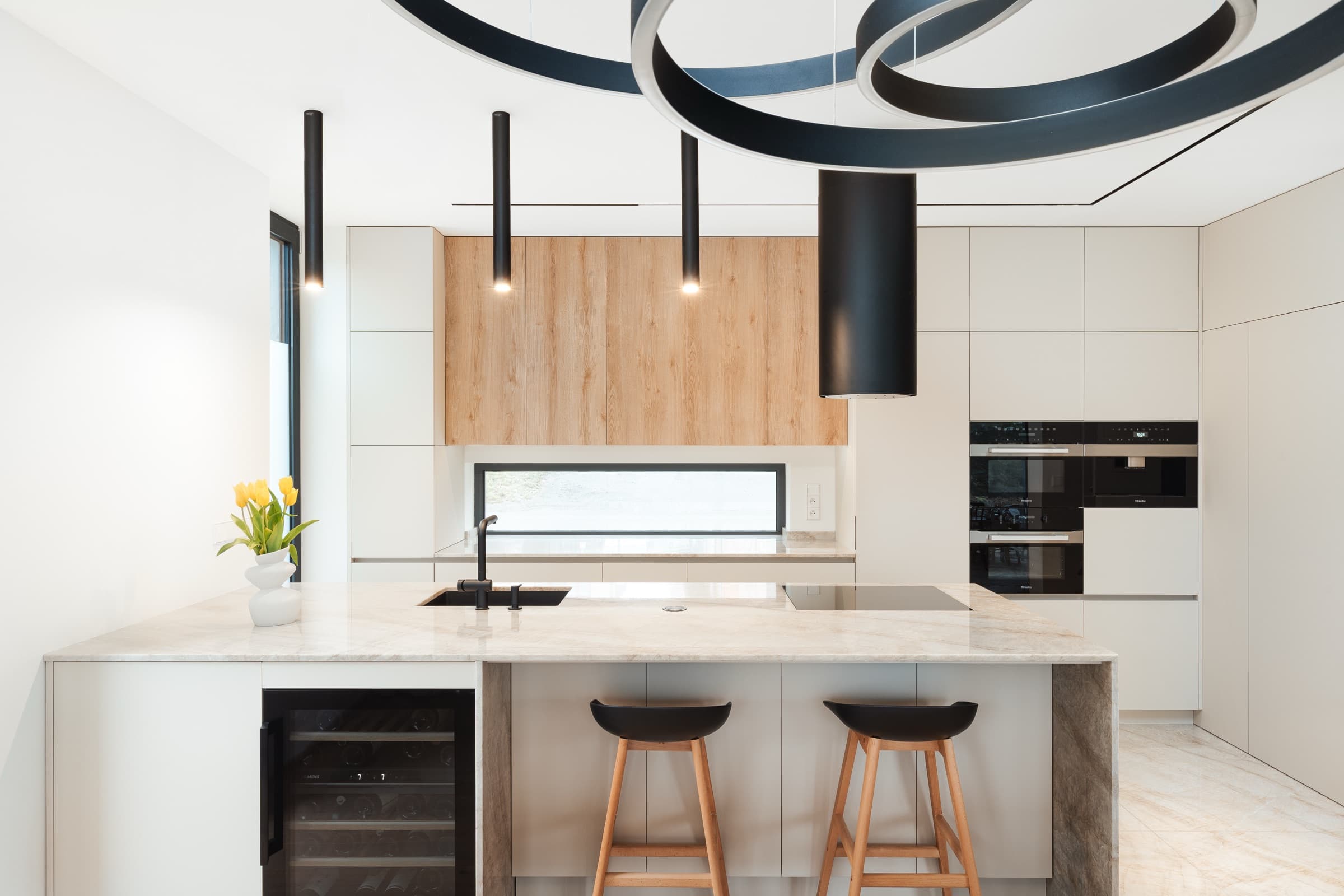
If you’re of average height, we recommend a countertop height of 920 mm. Ten years ago kitchens were built at 860 mm, and some manufacturers are still stuck there. The same goes for appliance makers, so pay special attention to dishwasher height. With BOSCH, for example, you’d pick a dishwasher from the XXL category. The extra 60 mm also gives you more storage in the lower cabinets.
We recommend a 100 mm toe kick. The 150 mm toe kicks that used to be popular also eat into your kitchen storage. Most appliances (dishwasher and fridge) work with a 100 mm toe kick.
We usually leave 550 mm between the countertop and the upper cabinets. I’d only consider more with a gas cooktop.
Upper cabinets can either run all the way to the ceiling or stop short of it. That’s largely a design question, and a question of whether you want storage up near the ceiling even if it’s harder to reach. Don’t forget to leave enough ventilation for fridges and freezers.
Hardware
Drawers
We use hardware from the Austrian manufacturer BLUM almost exclusively, and it comes with a lifetime warranty. Our standard is BLUM’s mid-range Antaro or Merivobox, and for high-end kitchens the flagship BLUM LEGRABOX line. LEGRABOX has a slightly higher dynamic load capacity and modern, slim drawer sides set at a right angle to the bottom. The sides come in several colors (white, gray, black, stainless steel). The drawers are soft-close and can also be push-to-open (you just press on the front). For larger drawers, we use slides with a higher dynamic load capacity and add gallery rails. We fit the deepest drawers the cabinet boxes allow, so no space goes to waste. Most manufacturers buy 500 mm slides by the truckload and use them everywhere, whether or not your space has room for more.
Hinges
Again, we use BLUM, with a lifetime warranty. In dark kitchens, BLUM’s dark ONYX line looks good. The hinges are either soft-close or use BLUM Tip-On for push-to-open.
Lift-up doors
We use them all the time on upper cabinets. BLUM makes several lines, and we’ll recommend the right one for your setup.
Corner solutions
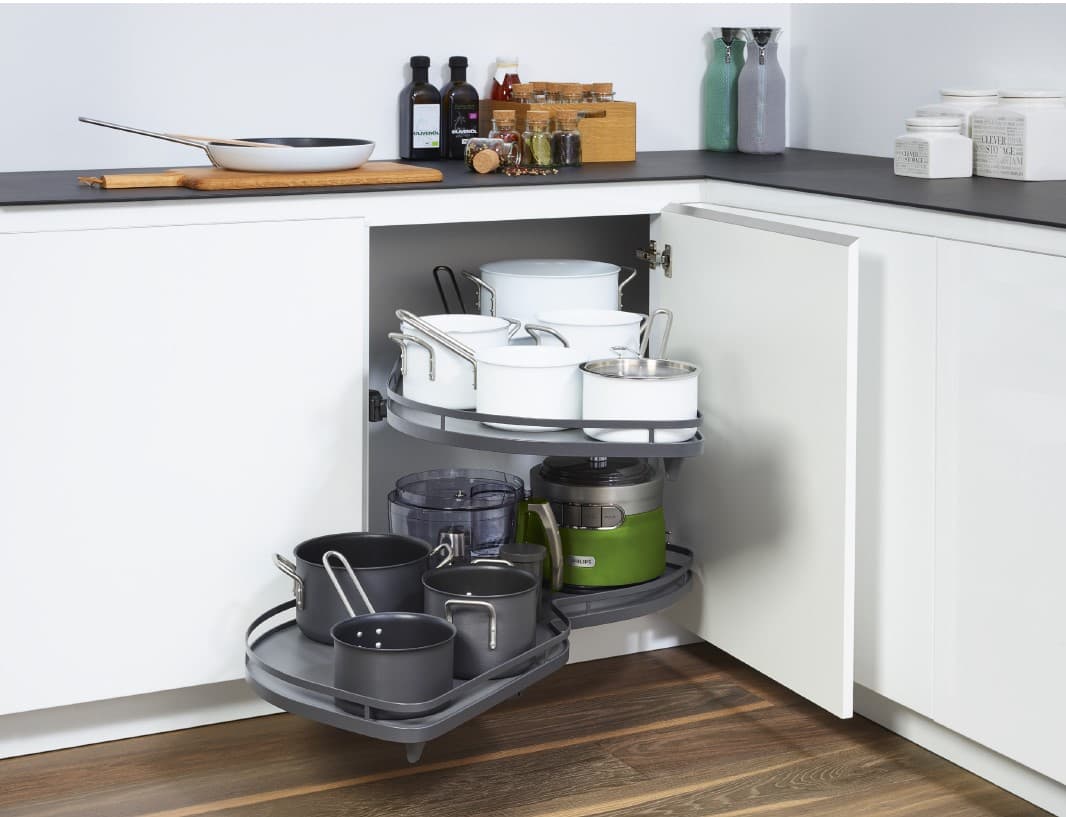
There are tons of corner solutions from different manufacturers. In my opinion, the best way to use a corner is a quality kidney-shaped Kesseböhmer LeMans unit. Budget roughly 10,000 CZK plus VAT for a two-tray setup. Otherwise, you can put shelves in the corner cabinet and keep things you only take out once a year in the hard-to-reach part around the corner.
Pantry cabinets
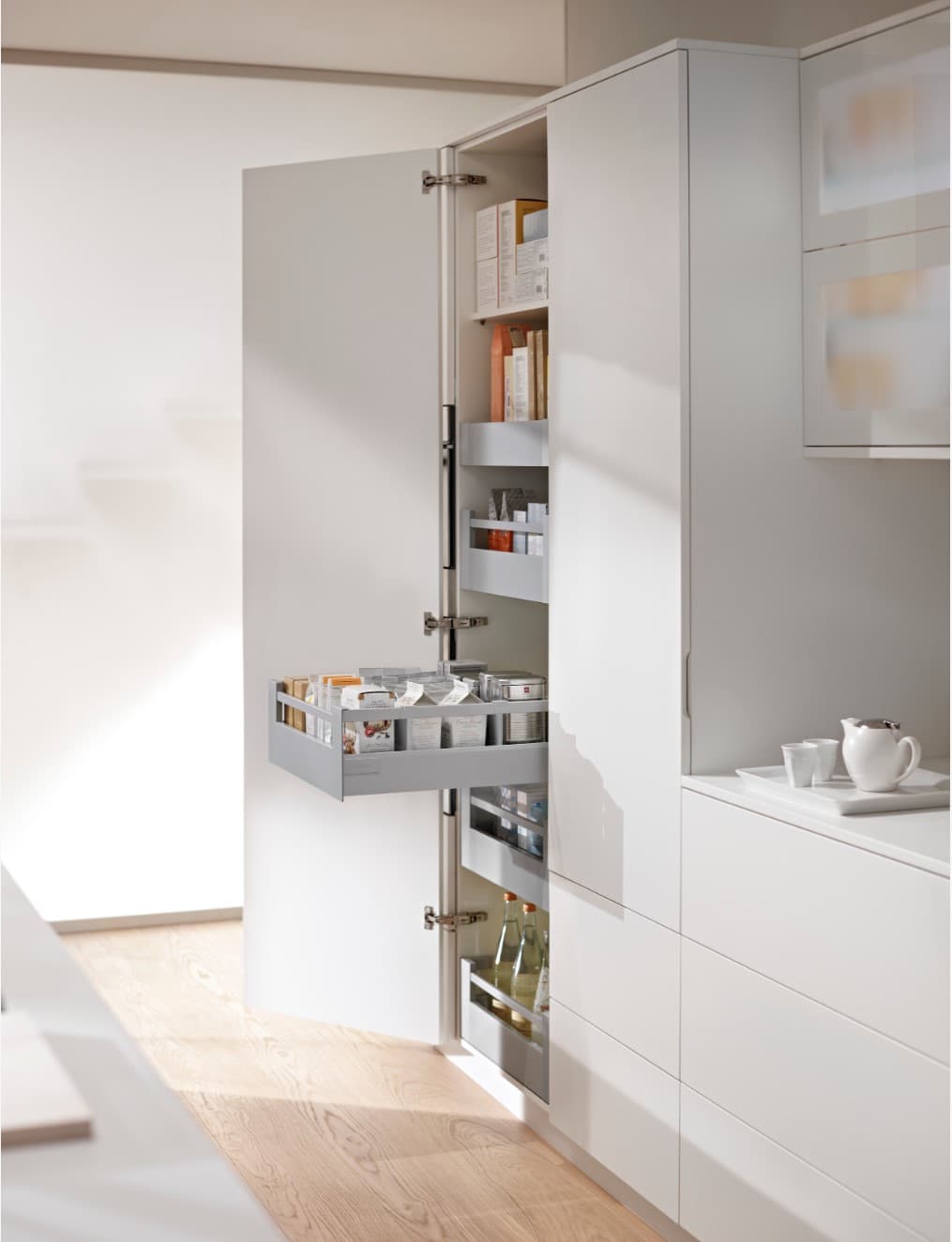
I’m not a fan of pull-out wire systems. I find them awkward to use. We’ve also tried motorized pull-outs, but they’re expensive, and wire systems have just never grown on me. Drawers you can reach directly are best. If the design calls for hiding the pantry behind a large door, I think the BLUM Space Tower does a good job. Open the door and you can reach each drawer from above, and the drawers pull out with minimal effort.
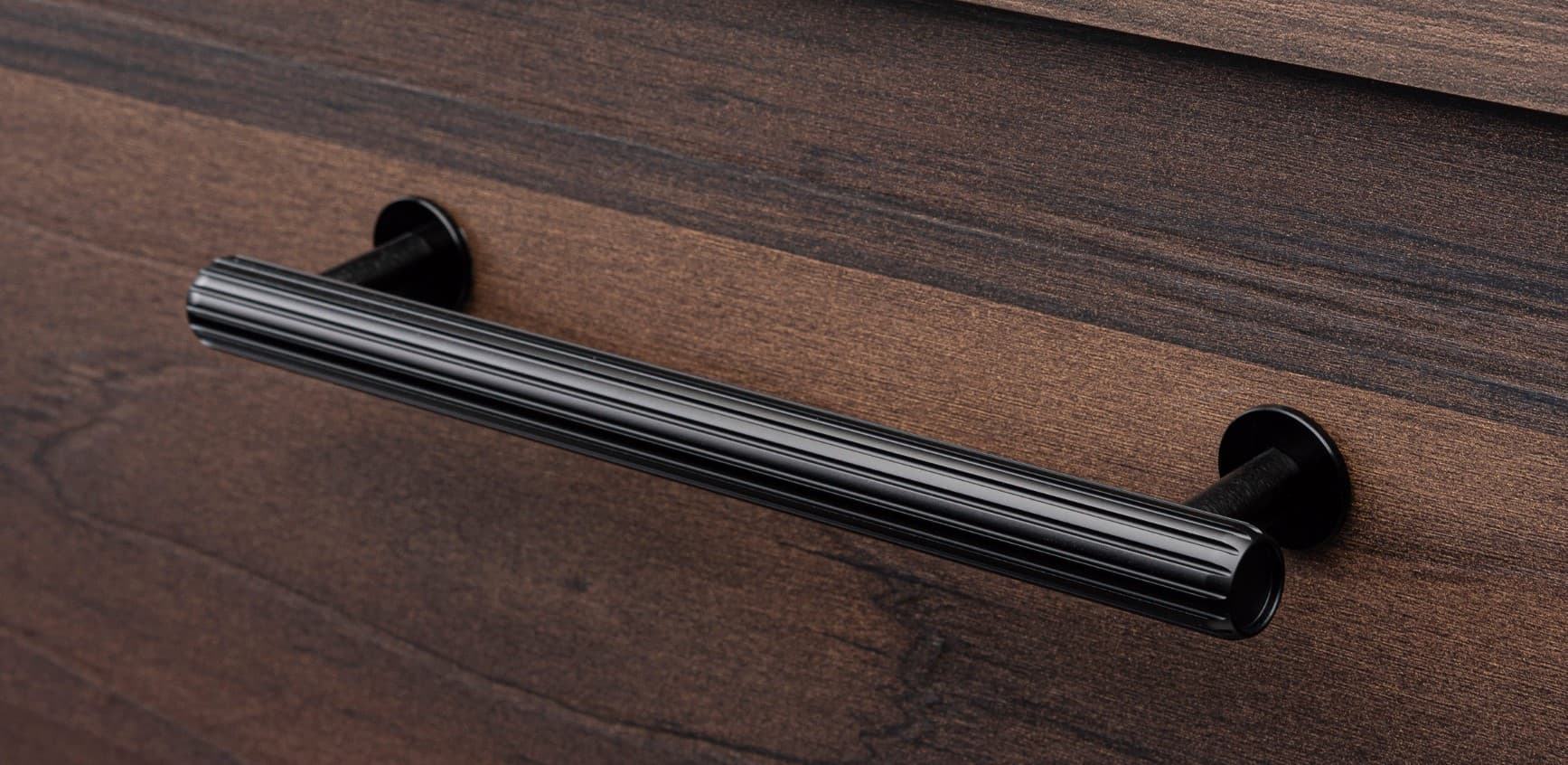
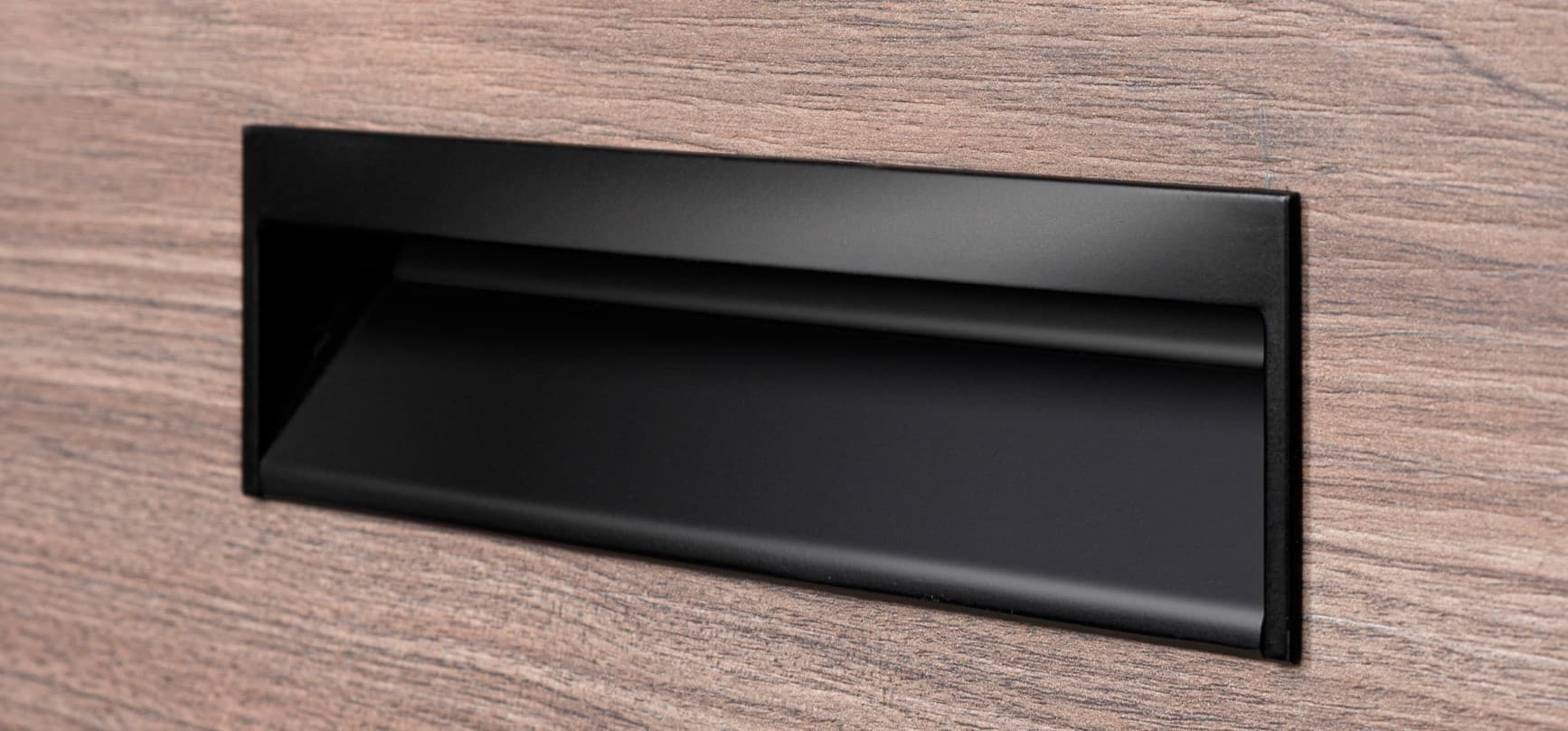
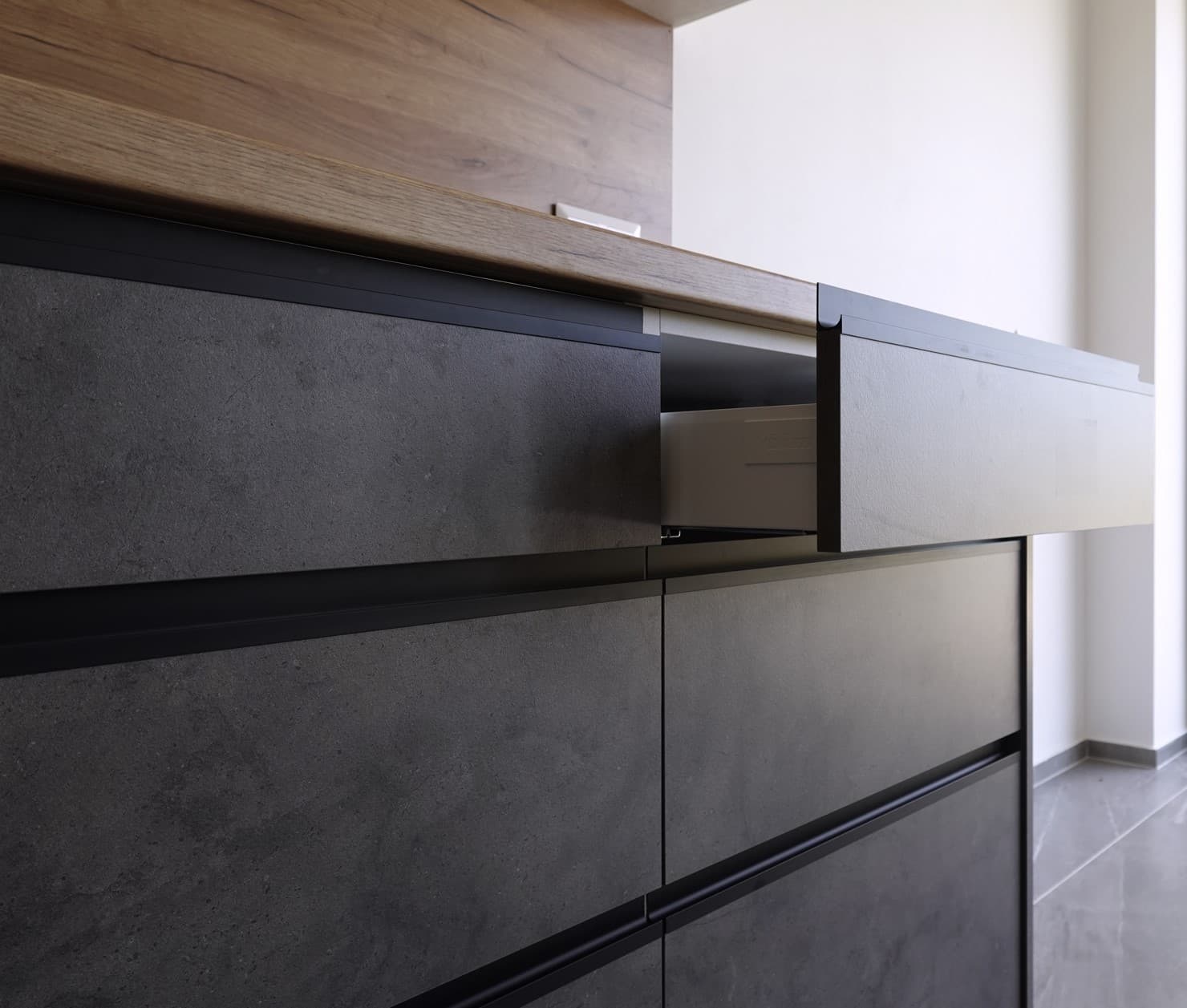
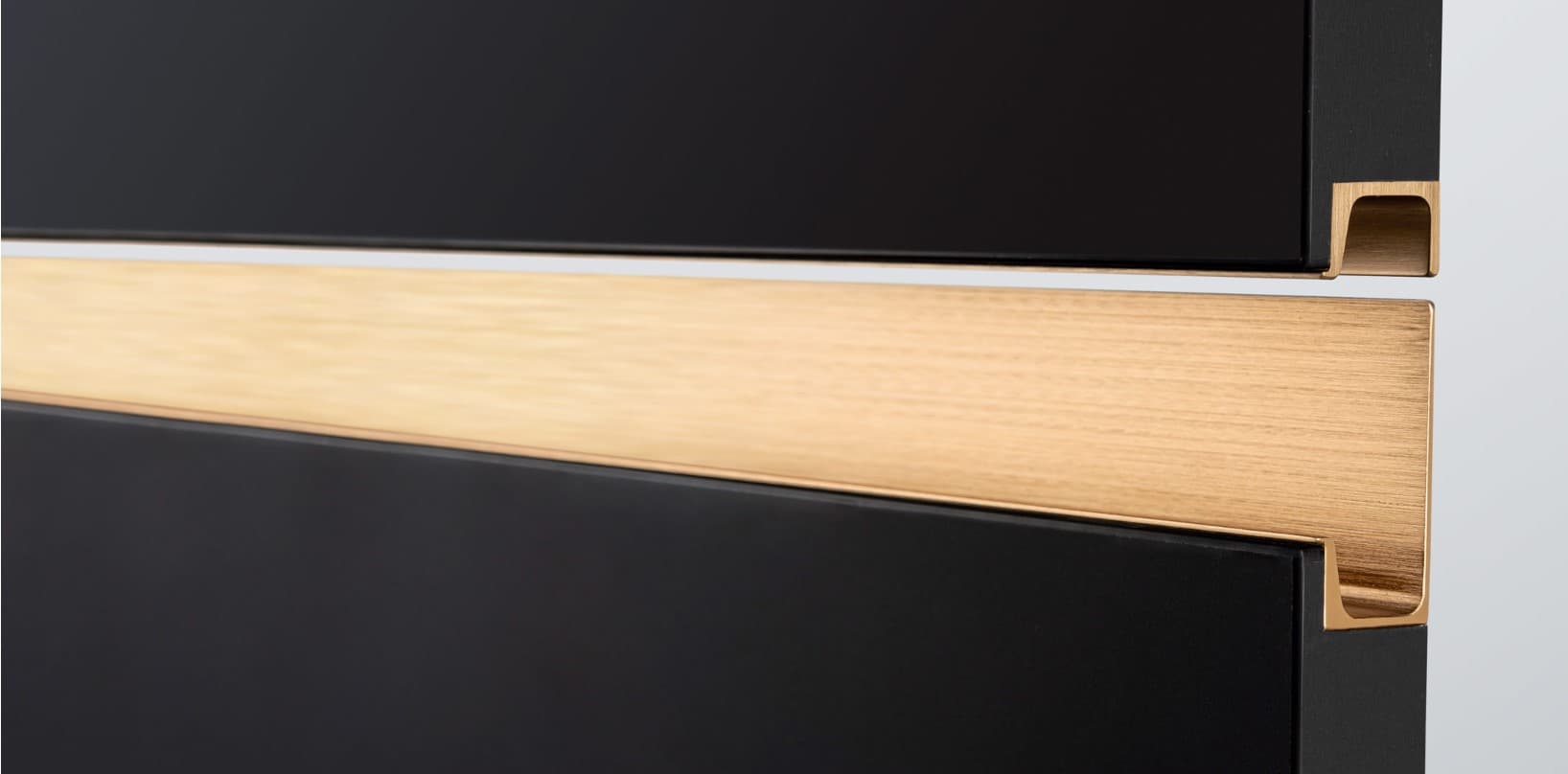
Push-to-open and pulls
You can set up practically everything in your home as push-to-open (you open it by pressing on the drawer front or door). In kitchens, the dishwasher, fridge and freezer need motorized openers, and each motor runs roughly 10,000 CZK plus VAT. If a clean look makes you happy and you don’t mind cleaning the doors and living with slightly clunkier operation, it’s a valid option. Kitchen trash pull-outs use a cheaper motor at 3,500 CZK plus VAT, and there I’d recommend it.
With clients, I usually prefer to find a solution among the pull options below.
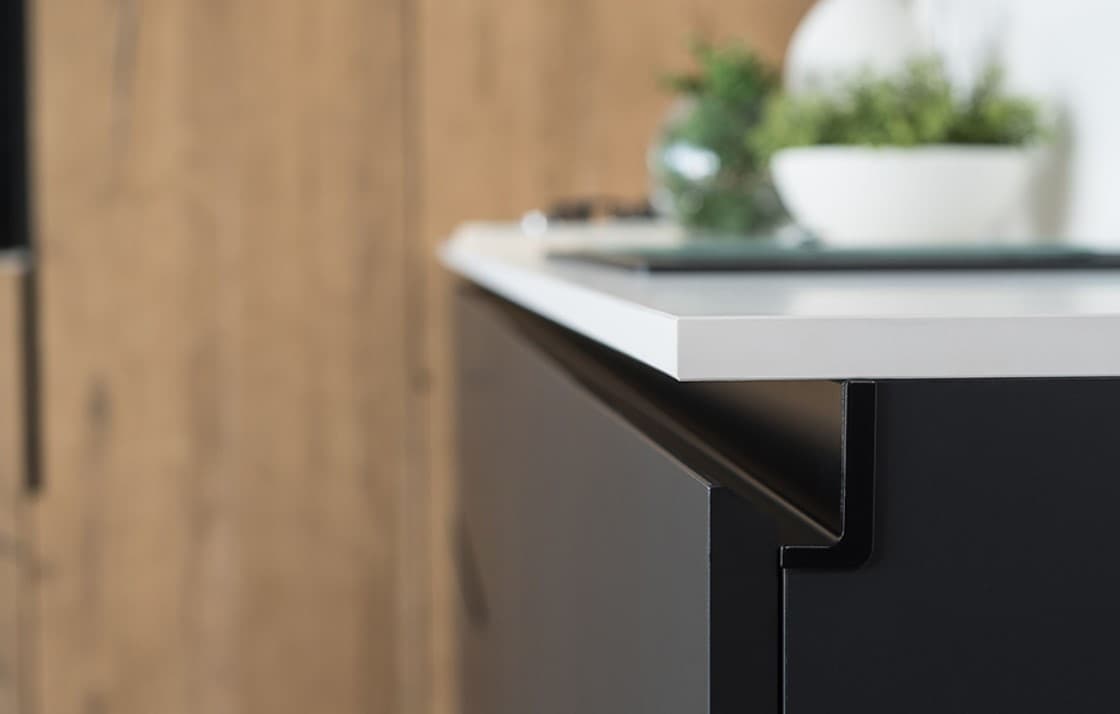
Appliances
We can order and install any appliance. Lately our clients have mostly chosen AEG, BOSCH, SIEMENS and LIEBHERR, with MIELE or BORA for more discerning clients.
For refrigeration, I recommend LIEBHERR (a fridge with BioFresh). With dishwashers, watch the height: taller kitchens usually need an XXL model. I’d also give the range hood some real thought. Most people leave it for last.
When we build in appliances, we don’t just make them fit. We plan each one around your specific kitchen and your specific model. We download the latest drawings from the manufacturer and usually adjust the cabinet under the oven so there’s no ugly gap below it. And we take appliance ventilation seriously.
Sinks and faucets
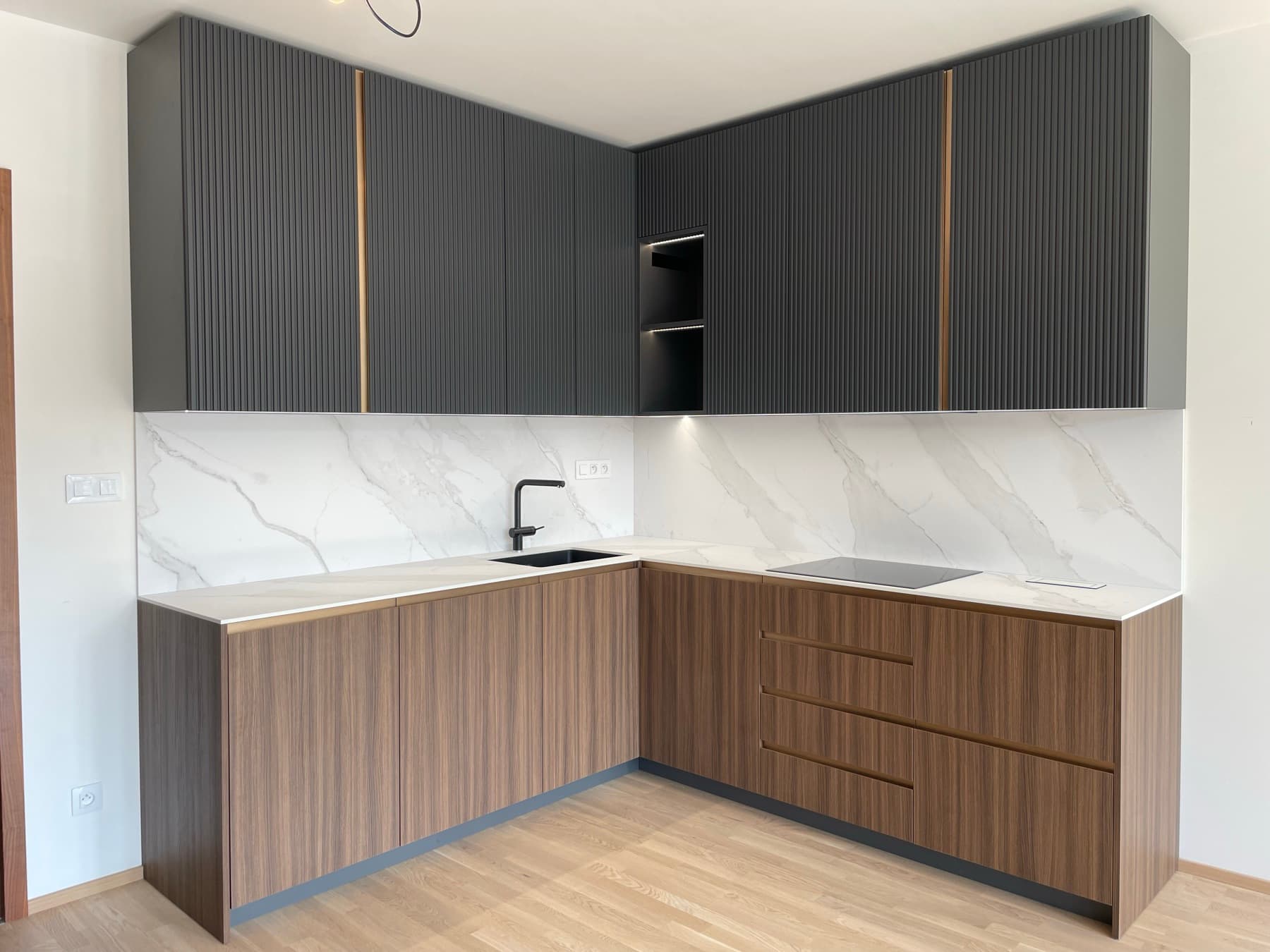
With a laminate countertop, you’re limited to drop-in sinks. With other countertops, it’s your call, but I think undermount sinks are a good choice. We use a lot of FRANKE, BLANCO and GROHE sinks and faucets. Technically, it doesn’t matter whether you go with stainless steel or a colored composite. In our kitchens, anthracite sinks with matching anthracite faucets are very popular right now.
Trash and recycling
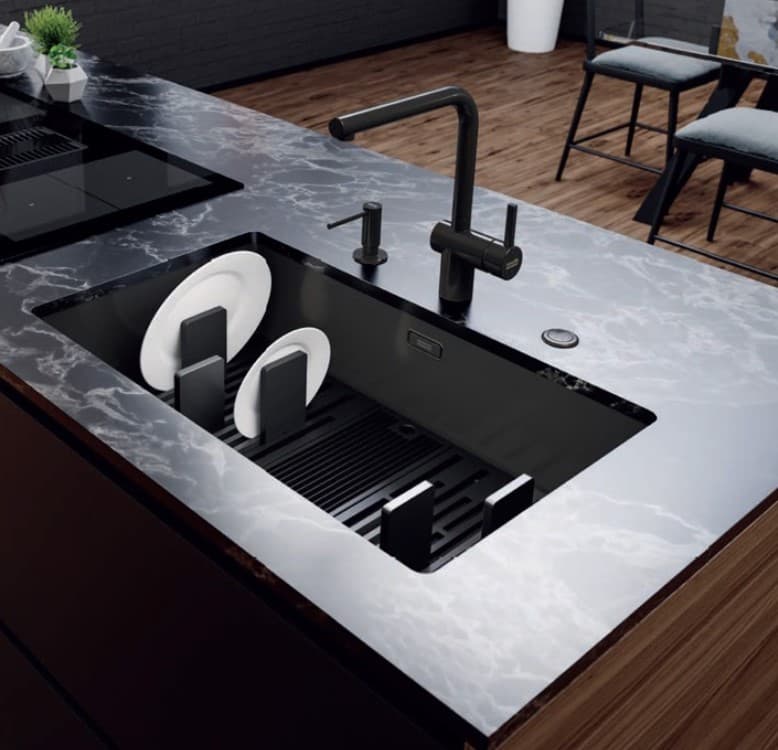
Trash and recycling bins usually go in the sink cabinet. If we use a sorting system with its own pull-out, it comes with the slide mechanism and its own bins. Or we build a standard BLUM pull-out, and you can put any bins you like in it.
There’s usually a shelf above the bins where you can keep cleaning supplies, for example, and it also helps contain odors a bit. The catch is that nothing can stick up out of any bin. The bins are also fairly small, so check what size you’re used to at home first.
How to spot quality
Quality starts with the design.
From day one, we balance design × material options × manufacturing options × price. These usually pull against each other. When a brief comes to us from a designer or architect, typically only the design has been worked out, and the other three have taken a back seat.
Quality depends on proper production drawings.
We use software from IMOS AG, the highest-quality and also the most expensive there is, and we work out every detail before production starts. We agree on storage heights and widths down to the millimeter. We eliminate any hardware conflicts and plan the cutouts for outlets and the cable runs for LED lighting. We can make a replacement for every single part.
Quality means nothing gets lost in the handoff.
Our software generates production data straight from the 3D model, and it matches the approved design exactly, down to the last shelf pin. The data goes directly into the machines, which process each part with a precision of tenths of a millimeter. No manual setup, no manual data entry.
Quality takes quality machines.
Our machines are German and less than five years old. Every dimension is set by servo motors. Cuts are precise and chip-free. Our edge banding is top-notch. The CNC machine reads the barcode on each part and machines it to within tenths of a millimeter.
Quality takes quality people.
In design prep, you’ll work with college-educated professionals. In the shop, we have excellent cabinetmakers with years of experience. They’ve been with us a long time, so they know a process we’ve refined over the years.
Quality comes down to honesty.
We sweat the details, even the ones that are hard to see. We edge-band the panels along the walls and above the toe kick, just in case you ever feel like lying down on the floor next to one of our kitchens. Open the drawer under the sink and you won’t find chipped, chewed-up parts. And our toe kicks are finished perfectly where they meet the walls and floor.